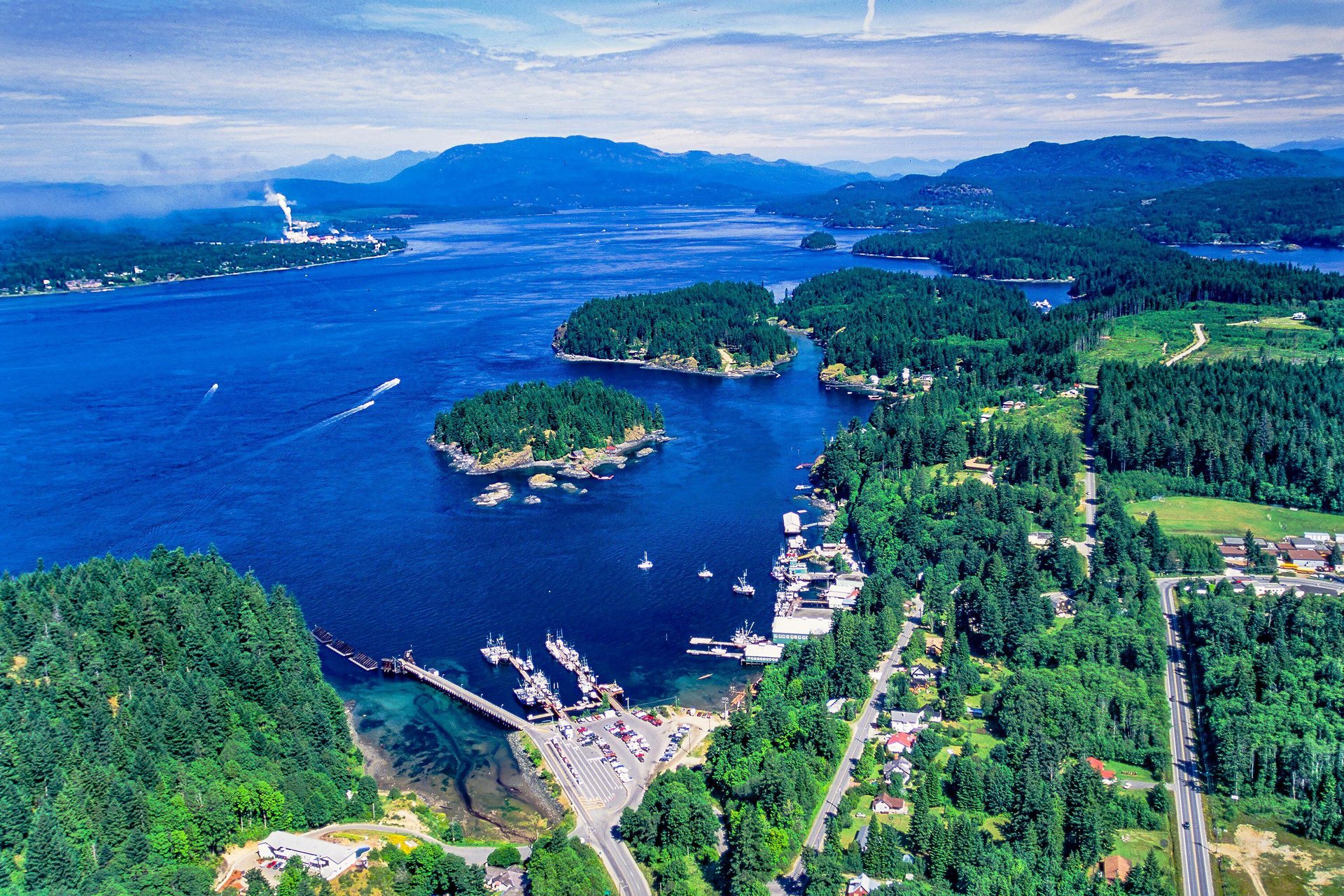
Pre-empted in 1908. Pre-empted by the Laichwiltach for centuries before that. Logged, browsed, fished from, lived on. A page for our neighbors — and anyone else curious about what Grouse Island has been.
Grouse Island and Quathiaski Cove were in use as a seasonal camp for the K'omoks people, a Coast Salish group who wintered at the present village of Cape Mudge. A sub-group called the yayaqwiLtah held the territorial rights to the Cove. The fish-bearing stream now called Pidcock Creek — which empties at the current ferry dock — was a place of ritual purification of the dead in preparation for tree burials.
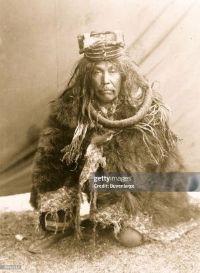
"It was taboo to all except members of the hamatsa order," wrote an anthropologist of the 1930s, referring to an elite social order marked by dances and songs. Young noblemen being initiated as hamatsas were sent into the forest to live alone for weeks.
A registered archaeological site at the north end of Quathiaski Cove, marked by deep clamshell midden, was likely the seasonal village.
Early in the 19th century, the K'omoks were driven out of the Discovery Passage region by the Laichwiltach people, a federated group of bands with a different language and customs. Their numbers were cut sharply by the smallpox epidemic of 1862. One Laichwiltach group, the We Wai Kai, settled at Cape Mudge. As We Wai Kai elder Harry Assu recalled:
"When I was a boy, some of our people lived in and around Quathiaski Cove. We call it gwanusba?. It means place on north side of point — from Cape Mudge."
The K'omoks name Kweʾsayʾskin — "island in its bite" — refers to the Cove and the small island sitting inside it. Grouse Island has been that island in the bite for as long as anyone has had a word for the place.
Euro-Canadian settlers moved into the Discovery Passage region in the 1880s. In 1889, the partners Mike King and Lewis Casey established a logging camp on the knoll in the southeast corner of Quathiaski Cove. Their commissary sold boots, flea powder, and tobacco — and became the de-facto supply hub for the scattered settlers of the region.
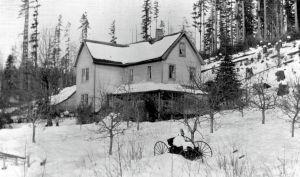
A Welsh settler named Bob Hall took the commissary over from the loggers around 1892 and turned it into a store and post office. The Pidcock family bought it from him in 1898, building a new store at the head of the wharf. The Pidcock home stood directly across from Grouse Island.
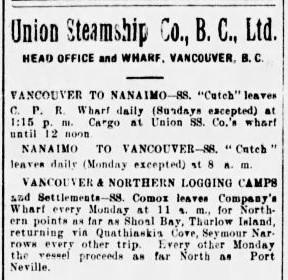
By 1904 the Pidcock brothers had built a cannery and a sawmill on the shore south of their home. Discovery Passage had gained renown by then for its fabulous salmon fishery. Sportsfishers — including titled English gentlemen who reported on their catches in Field and Stream — hired Indigenous guides to troll from canoes. The Pidcocks loved to fish, and often served as guides themselves.
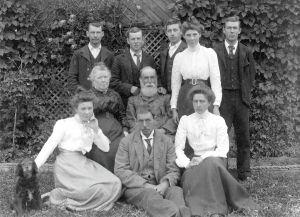
On July 6, 1908, a logger named Wellington Sikes "pre-empted" Grouse Island through a government land grant intended to foster development. Grouse Island was not suitable for agriculture — it's likely Sikes planned to log it and move on. There's a hint in community lore that Sikes registered for the island as a proxy for George Pidcock. Whatever the case, Sikes did none of the clearing required of a pre-emption, and his claim was cancelled the next year.
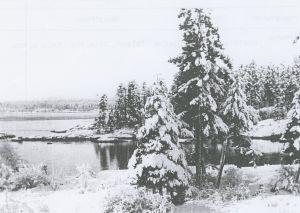
With the island returned to Crown land, George Hugh Pidcock purchased it for $42.50 in July 1909. He and his brothers used the island as browse for their livestock — which could be left to roam unfenced — and during the Pidcock tenure, Grouse was sometimes called Goat Island.
A contemporary recalled that the Pidcock brothers logged the island using their pile driver as a makeshift winch. Its reach was limited, so they only removed the perimeter trees. The interior was left standing.
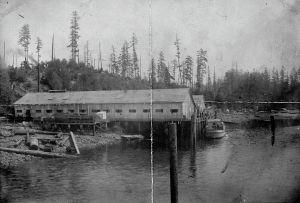
George Pidcock subdivided Grouse Island into Lot 1 and Lot 2 before leaving the area in about 1920. He likely intended to sell one of the lots but didn't — perhaps because of the depressed post-war economy. He let Lot 2, the north end, revert to the Crown for unpaid taxes; he held onto Lot 1.
By 1923, the Quathiaski Cannery — owned by the Klondike-rich W. E. Anderson — was a sprawling complex: a gas dock, shacks built on pilings for non-Indigenous fishermen, a warehouse, a government dock, a freight shed, the Anderson home, a cafeteria, a boat ways, the cannery itself, a net warehouse, a bunkhouse for the Chinese crew, and sixteen shacks along what's now the ferry parking lot for the Indigenous crew, who lived on site for the fishing season.
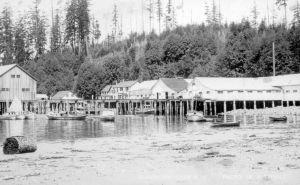
Quathiaski Canning Company held a 99-year commercial fishery lease that ran from Oyster River, south of Campbell River, all the way to the Adams River on the mainland. Their catch was sockeye, spring, pinks, chums, and cohoes. Salmon canners held exclusive commercial rights inside their leases. Independent fishers — including the Indigenous handliners — sold their catch to the cannery that held the lease they fished within.
In 1928, Frank Robert Denton — born on England's Isle of Wight, originally a carpenter and joiner, later a skilled millwright on the BC mid-coast — bought Lot 2 of Grouse Island from George Pidcock. He and his wife Edith were in their mid-forties when they established their own business on the island: Island Marine Ways, a boat works and fuel dock serving the busy fleet of Quathiaski Cove.
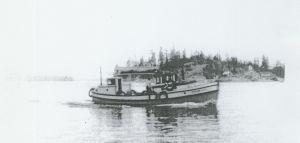
The Dentons arrived in the fall of 1928 with a scow-load of luggage and furniture, followed by a second scow with lumber. They pitched tents on shore and immediately set to work building a large home, dock, and repair facilities.
A 1930 profile in Western Canada Power Boat marveled at how much the family had accomplished in two years. The island was easily spotted, said the journalist, by the Dentons' prominent signs and electric lights twinkling everywhere. They had a comfortable six-room home on shore, above the machine shop, with two wharves to accommodate boats awaiting service.
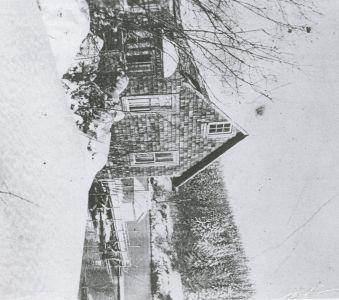
Allan Denton, the son, was eighteen when the family bought the island. He'd contracted polio as a boy, which left him with a limp, "but he never let that slow him down," recalled his daughter-in-law. The 1930 article also describes Edith working alongside the men in the long winter days, cooking, putting up with inconveniences "that would make a less courageous woman downhearted."
The Dentons were the heart of a lively local scene — parties at the big house, May Day picnics, all-night dances at the community hall. In 1938, their daughter Eileen was married in little St. John's Church on the hill behind the cannery — in white satin, with a tiara of seed pearls.
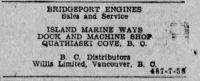
Edith Denton's health began to fail in 1938, requiring care in Vancouver. The couple gave up the business and moved to Victoria in about 1940. A year later, in August 1941, the Quathiaski Cove Cannery burned down at the peak of the fishing season. BC Packers, who had bought the cannery from Anderson in 1937, chose not to rebuild. They consolidated the catch onto packer boats and ran it to Steveston instead.
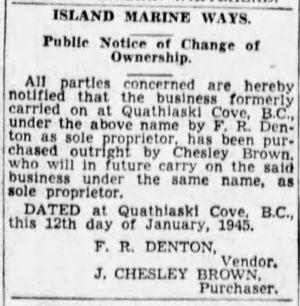
In 1945, the Dentons sold Island Marine Ways and Grouse Island to J. Chesley Brown. Brown let the repair business go, keeping only the fuel dock operational. With the cannery no longer adjacent, the marine repair trade had largely moved elsewhere. The island slowly transitioned from working ground to a quieter use: a summer getaway.
From 1947 on, canneries no longer held exclusive fishing rights. Anyone with a boat could fish where they pleased and sell their catch to any canner. The ferry service across to Campbell River matured. April Point Lodge, just up the cove, became famous for sport fishing. Quathiaski Cove turned over from a working port to a small island town with a community of summer homes — and Grouse Island found new owners who saw it less as a livelihood and more as a place to escape to.
We bought Grouse Island as stewards. The plan is small in footprint and respectful of what came before.
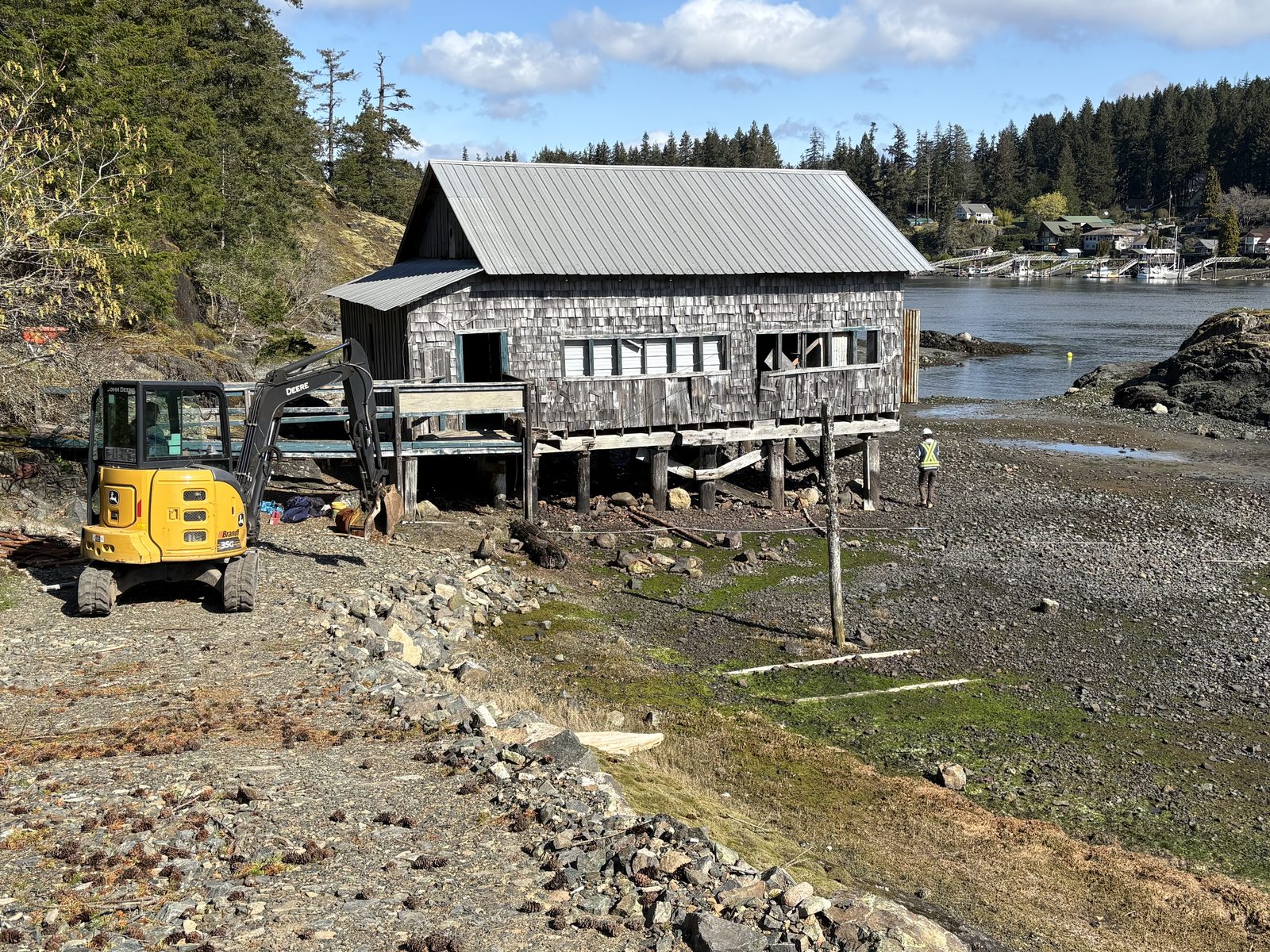
The boathouse and netshed on the east side of the island — a holdover from the working-cove era — was in real danger of collapse. We are rebuilding it on its original footprint, salvaging what we can, in keeping with the original character. This is the most visible thing we are doing.
The three-bedroom, two-bath house on the island wasn't built by us — it was already here. We restored it without expanding its footprint. It is comfortable but not fancy or historic; we left it that way on purpose. The location does the work.
Replacing what was there. Engineered for the same vessel class the Dentons' wharves once served.
A wood-fired floating sauna tied off the south shore. Fired with deadfall gathered from the island, looking out at the harbor seal haul-out on the rocks across the way.
The island needed somewhere for utilities, mechanical equipment, and a small garage. We built it fully underground, with a living green / moss roof. From a boat in the cove you can't see it. From the trails above it you walk over the top of it without noticing.
If you live in Quathiaski Cove, on Quadra Island, or anywhere with a view of Grouse Island, and you are curious or concerned about something we are doing — write to us. We'd rather hear from you than have you guess.
Historical content drawn from a draft history of Grouse Island prepared in 2025, with sources including the Museum at Campbell River archives, Harry Assu's Assu of Cape Mudge, and contemporary newspaper accounts. Historical photographs courtesy of the Museum at Campbell River where credited.